

Hot rod restoration represents a significant investment of time, money, and passion. After months of hunting down parts and planning the perfect build, the last thing anyone wants is a coating failure that compromises the entire project.
Many restoration enthusiasts encounter setbacks that could have been avoided with the right coating approach. These mistakes can lead to premature rust, peeling finishes, and the need to redo work that was already completed. Understanding the most common coating errors helps ensure a restoration project delivers lasting results.
Mistake #1: Choosing Liquid Paint Over Powder Coating for Frames and Chassis
One of the most frequent mistakes in hot rod restoration involves selecting traditional liquid paint for the frame and chassis instead of powder coating. While liquid paint may seem like the conventional choice, it falls short in several critical areas.
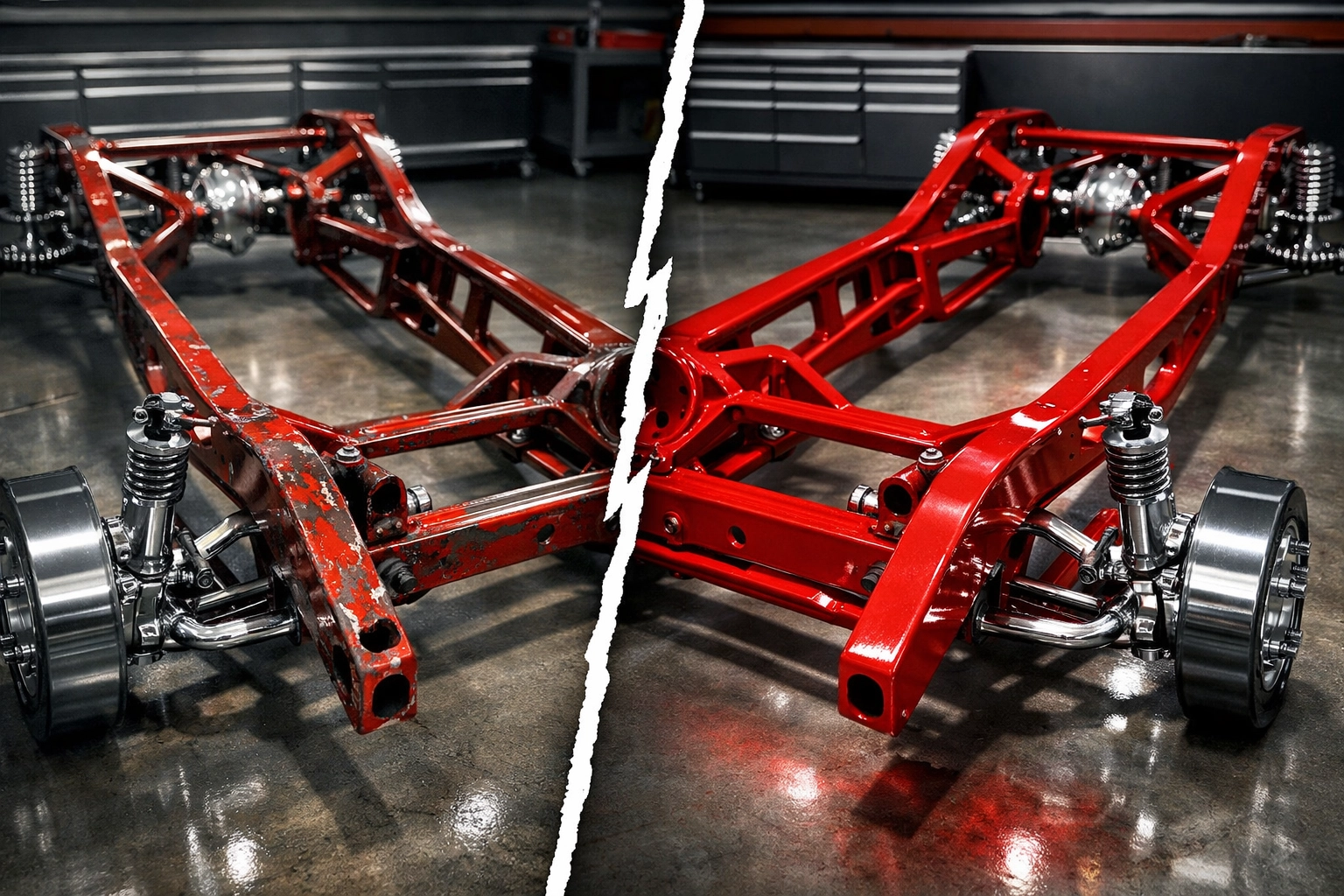
Powder coating creates a finish that is significantly more durable than liquid paint. The process involves applying a dry powder electrostatically to the metal surface, then curing it in an oven at approximately 400 degrees Fahrenheit. This creates a chemical bond that is much stronger than the mechanical bond created by liquid paint.
The difference becomes apparent in real-world conditions. Frames and chassis components endure constant exposure to road debris, rocks, oils, and moisture. Liquid paint chips more easily when struck by stones or scratched during installation. Once the paint is compromised, moisture can penetrate and cause rust to form underneath the coating.
Powder coating resists chipping and scratching far more effectively. The cured powder coating is thicker and more uniform than most spray paint applications. This extra thickness provides better protection against impacts and abrasion. Additionally, powder coating does not contain solvents that can evaporate over time, which means it will not fade or become brittle as quickly as traditional paint.
For hot rod restoration projects in coastal areas like Santa Cruz, San Jose, and Monterey, the salt air presents an additional challenge. Powder coating provides superior corrosion resistance, which is essential for maintaining the integrity of the frame over many years.
The finish quality also differs between the two methods. Powder coating creates an even, consistent appearance without the drips, runs, or orange peel texture that can occur with liquid paint application. This professional-grade finish enhances the overall appearance of the restoration.
Mistake #2: Inadequate Surface Preparation or Skipping Sandblasting
Surface preparation represents the foundation of any successful powder coating application. Skipping or rushing through this critical step is one of the most damaging mistakes in hot rod restoration.
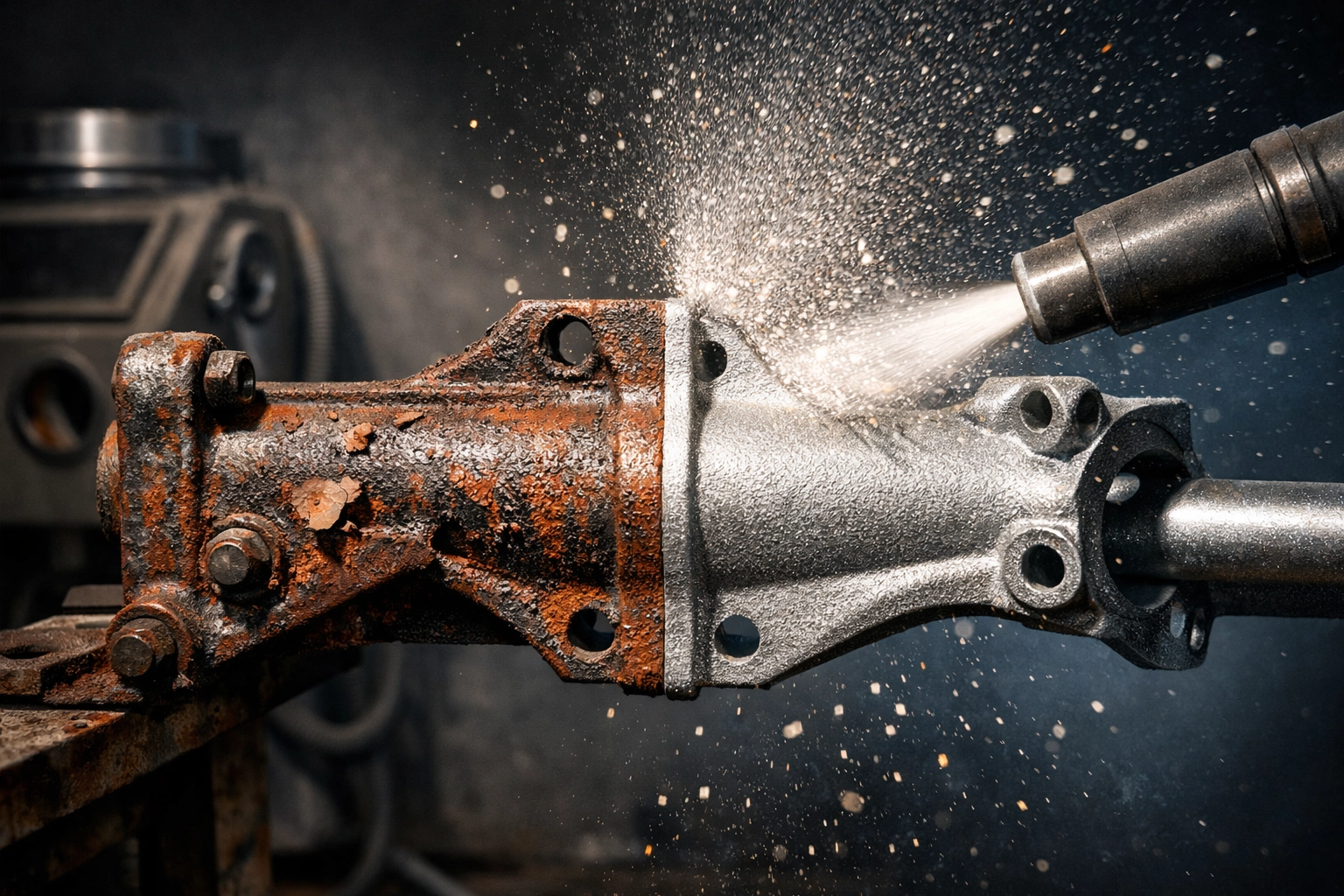
Many restorers underestimate the importance of completely clean metal surfaces. Dust, oil residue, old paint, rust, and mill scale must be thoroughly removed before powder coating can be applied. When contaminants remain on the surface, the powder coating cannot form a proper bond with the metal.
The sandblasting process removes these contaminants through abrasive blasting. This method not only cleans the surface but also creates a texture profile that allows the powder coating to adhere more effectively. The slightly roughened surface provides more surface area for the coating to grip, resulting in a stronger bond.
Some restorers attempt to save time or money by hand-sanding or using chemical strippers instead of professional sandblasting. While these methods may appear to clean the surface, they rarely achieve the level of cleanliness required for optimal powder coating adhesion. Microscopic contaminants that remain on the surface can cause the coating to fail months or even years later.
The sandblasting stage also reveals hidden problems. Rust pitting, cracks, or weak welds that were concealed under old paint become visible once the surface is properly stripped. Identifying these issues before coating allows them to be addressed, preventing structural problems down the road.
After sandblasting, parts must be handled carefully to prevent oil from hands or tools from contaminating the clean surface. Professional powder coating facilities maintain strict protocols to ensure surfaces remain pristine from the blasting stage through the coating process.
The pre-treatment process may also include phosphating, which adds an additional layer of corrosion protection. This chemical conversion coating improves adhesion and provides extra rust resistance, particularly important for frames that will be exposed to moisture.
Mistake #3: Using Standard Powder Coating on High-Heat Components
The third common mistake involves applying regular powder coating to components that experience extreme temperatures, particularly exhaust headers and manifolds. Standard powder coating is not designed to withstand the heat levels generated by exhaust systems.
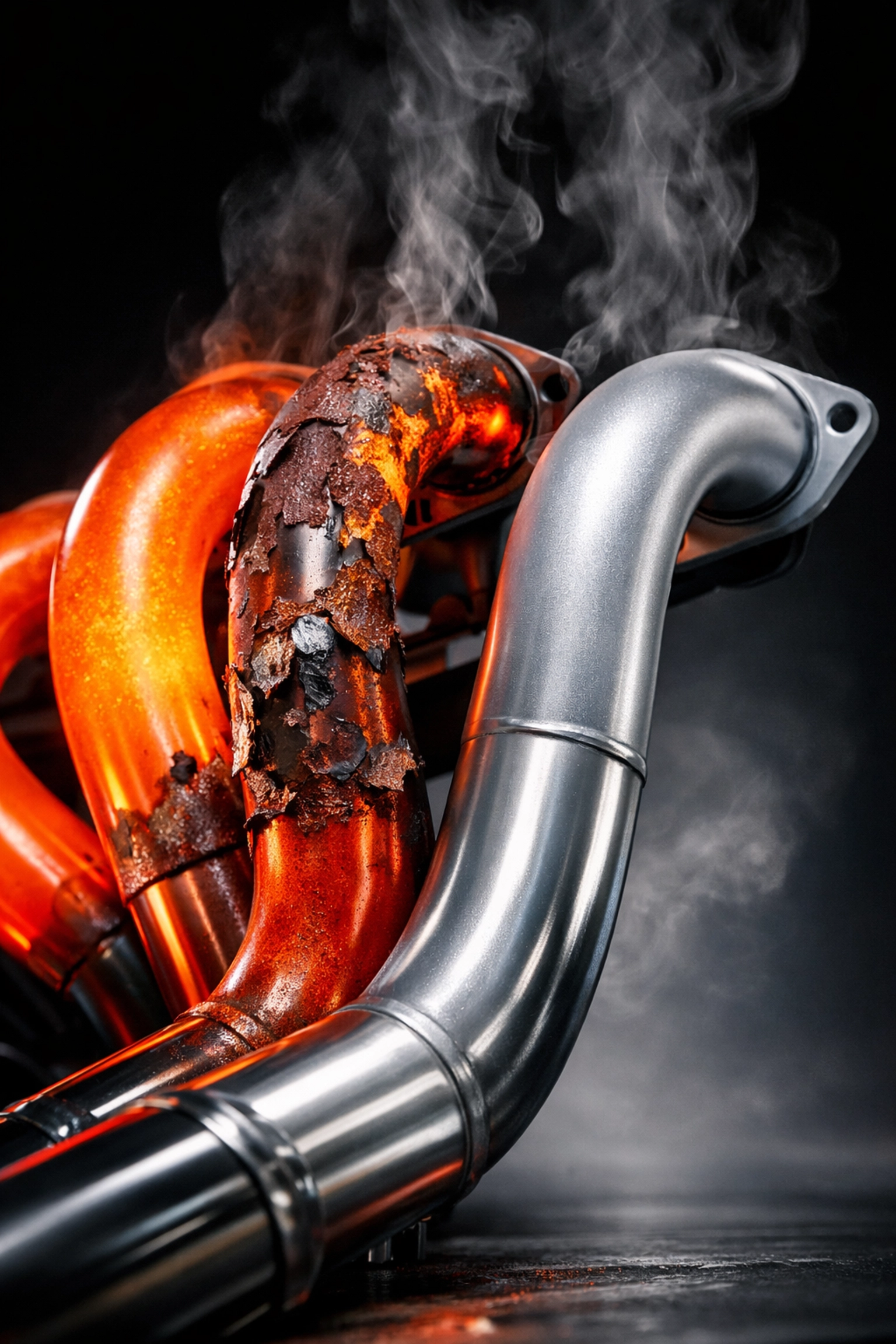
Most powder coatings are formulated to cure at temperatures around 400 degrees Fahrenheit and remain stable at temperatures up to approximately 200-250 degrees during normal use. Exhaust components regularly exceed these temperatures, often reaching 800 to 1,200 degrees Fahrenheit or higher during operation.
When standard powder coating is applied to headers or exhaust pipes, the coating breaks down rapidly. The powder begins to discolor, typically turning brown or yellow within the first few heat cycles. As the degradation continues, the coating may bubble, crack, or peel away entirely. This not only looks unappealing but also leaves the metal unprotected and vulnerable to corrosion.
The proper solution for exhaust components is ceramic coating, which is specifically engineered to withstand extreme temperatures. Ceramic exhaust coatings can endure temperatures exceeding 1,200 degrees Fahrenheit without breaking down or changing color.
Ceramic coating provides several advantages beyond heat resistance. The ceramic barrier insulates the exhaust components, which can help reduce under-hood temperatures and improve engine performance. The coating also resists the chemical attack from exhaust gases and road contaminants that would quickly corrode unprotected metal.
The application process for ceramic coating differs from standard powder coating. While both create a durable finish, ceramic coating requires specialized equipment and expertise to ensure proper coverage and curing. The coating is typically applied in multiple layers to build up the necessary thickness for maximum protection.
For hot rod restoration projects, choosing ceramic coating for exhaust components while using standard powder coating for the frame, suspension parts, and other non-heat-exposed components provides the best combination of protection and appearance. This approach ensures each component receives the appropriate coating for its specific operating conditions.
Getting It Right the First Time
Avoiding these three mistakes requires partnering with a coating facility that understands the specific demands of hot rod restoration. Experience with automotive applications makes a significant difference in the final outcome.
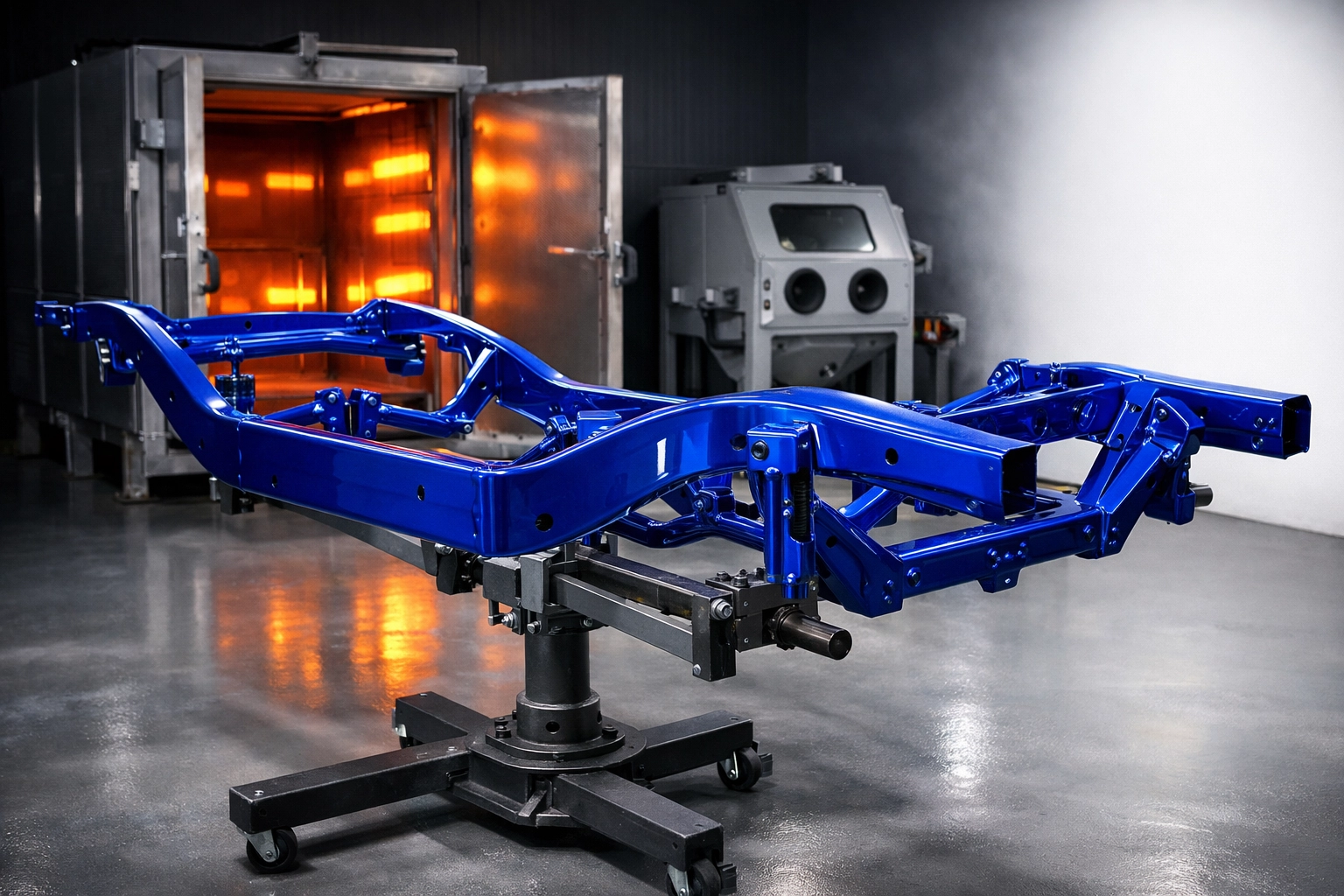
Professional facilities have the equipment necessary for thorough surface preparation, including industrial-grade sandblasting cabinets that can handle large frame sections. They maintain proper grounding systems to ensure even powder distribution during application. Their curing ovens are calibrated to provide consistent temperatures throughout the curing cycle.
Quality control measures at professional shops catch potential issues before they become problems. Parts are inspected after blasting to verify cleanliness. Coating thickness is monitored to ensure adequate coverage. Final inspection identifies any defects that need to be addressed before the parts are returned.
The investment in professional powder coating and ceramic coating pays dividends throughout the life of the hot rod. A properly coated frame can last decades without rust or coating failure. Headers and exhaust components maintain their appearance and protection through countless heat cycles. The finish quality enhances the overall presentation of the restoration.
For restorers in the San Jose, Santa Cruz, and Monterey areas, selecting a coating facility with automotive expertise ensures the project receives the attention and quality it deserves. The right coating approach transforms restoration work from a temporary fix into a long-lasting finish that protects the investment for years to come.
Powder Coat It has been providing professional powder coating and ceramic exhaust coating services to the Bay Area since 2010. Located in Santa Cruz, the facility serves hot rod enthusiasts and restoration professionals throughout San Jose, Monterey, and surrounding communities.
The company specializes in automotive applications, including frames, suspension components, wheels, and exhaust systems. With expertise in both standard powder coating and high-heat ceramic coatings, Powder Coat It delivers the right solution for every component.
For more information about powder coating services for hot rod restoration projects, visit www.powdercoatitsc.com or contact the team directly.
Contact Information:
Email: powdercoatitsantacruz@nullgmail.com
Phone: (831) 435-9558
Recent Comments