

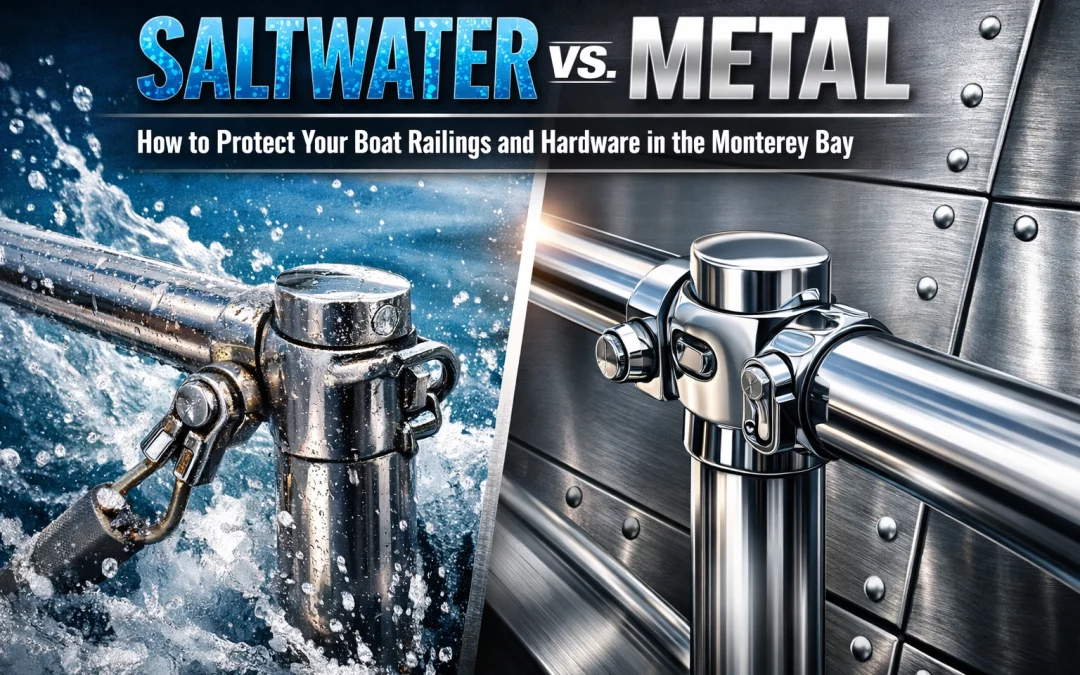
Boat owners along the Monterey Bay coastline: from Santa Cruz down through Monterey and Watsonville: face a unique challenge. The combination of salt air, ocean spray, and constant moisture creates an aggressive environment that attacks metal boat components relentlessly. Railings, cleats, ladders, and hardware that look pristine in the showroom can develop rust, pitting, and corrosion within months of regular saltwater exposure.
The deterioration happens faster than most boat owners expect. What starts as light surface rust quickly spreads beneath paint layers, compromising both the appearance and structural integrity of critical boat components.
The Science Behind Saltwater Corrosion
Saltwater accelerates metal corrosion through a process called electrochemical reaction. When salt dissolves in water, it creates an electrolyte solution that conducts electricity between different metals or even between different areas of the same metal surface. This electrical current causes metal atoms to break away from the surface, forming rust and corrosion.
The salt crystals in ocean air are particularly destructive. Even when a boat is docked or trailered away from direct water contact, the salt-laden fog that blankets the Monterey Bay area settles on metal surfaces. These salt deposits absorb moisture from the air, creating a continuous corrosive environment that never fully dries.

Traditional steel and aluminum components face different but equally serious threats. Steel railings develop iron oxide (rust) that eats through the metal layer by layer. Aluminum hardware experiences pitting corrosion, where small holes form on the surface and gradually deepen. Both types of damage weaken the structural integrity of boat components over time.
The constant cycle of wet and dry conditions makes the problem worse. When saltwater evaporates, it leaves behind concentrated salt deposits that draw moisture back to the metal surface. This creates an ongoing cycle of corrosion that persists even when the boat isn't in use.
Why Marine Paint Fails in Saltwater Environments
Many boat owners attempt to protect their metal components with marine-grade paint. While paint provides a temporary barrier, it has fundamental limitations in saltwater environments.
Paint creates a thin surface layer that sits on top of the metal. When saltwater finds its way beneath this layer: through scratches, chips, or simple moisture penetration: it becomes trapped against the metal surface. The paint layer actually prevents the water from evaporating, creating a pocket where corrosion accelerates rapidly.
The expansion and contraction that occurs with temperature changes causes paint to crack and peel. Saltwater immediately infiltrates these compromised areas. Within a season, painted railings often show bubbling, flaking, and rust bleeding through the surface.
Touch-ups become a constant maintenance task. Each repair requires sanding, priming, and repainting: work that needs to be repeated regularly to stay ahead of the corrosion. The paint layer remains the weak point in the protection system.
The Powder Coating Advantage for Marine Applications
Powder coating provides a fundamentally different type of protection. Instead of sitting on top of the metal like paint, powder coating forms a thick, uniform barrier that bonds directly to the metal surface at the molecular level.
The process starts with proper surface preparation. Metal components are sandblasted to remove all traces of rust, old coatings, and surface contaminants. This creates a clean, slightly roughened surface that allows the powder coating to achieve maximum adhesion.

The powder coating material itself is applied as a dry powder that's electrostatically charged. This charge causes the powder particles to be attracted to the metal surface and cling uniformly to every exposed area: including hard-to-reach crevices and the backsides of railings. This complete coverage eliminates the weak spots that liquid paint inevitably leaves behind.
The coated part then enters a curing oven where temperatures reach 400 degrees Fahrenheit. The heat causes the powder particles to melt, flow together, and chemically bond with the metal surface. As the coating cures, it creates a continuous film that's typically 2-3 times thicker than conventional paint.
This thickness makes a critical difference in saltwater environments. The coating creates a substantial barrier between the metal and the corrosive elements. Even if minor scratches occur during use, the depth of the coating prevents saltwater from reaching the base metal.
Superior Protection Against Monterey Bay Conditions
The marine environment around Santa Cruz, Monterey, and Watsonville presents specific challenges that powder coating addresses effectively. The persistent fog and moisture that characterize the Central Coast climate would normally accelerate paint failure, but powder coating remains unaffected.
Powder coated surfaces resist the salt crystal accumulation that plagues painted components. The smooth, non-porous finish prevents salt from embedding itself into the surface texture. When the boat is washed down, salt residue rinses away cleanly instead of lodging into microscopic surface irregularities.
UV exposure from the California sun adds another layer of stress to boat components. Paint fades and chalks under constant UV bombardment, but powder coating maintains its color and gloss for years. The molecular structure of cured powder coating includes UV inhibitors that prevent the degradation that weakens paint films.
Temperature fluctuations between cold morning fog and afternoon sun cause expansion and contraction in metal components. Powder coating flexes with these movements without cracking or separating from the metal surface. The chemical bond formed during the curing process remains intact through these cycles.
The Sandblasting Preparation Difference
The foundation of effective powder coating lies in thorough surface preparation. At Powder Coat It, the sandblasting process removes every trace of existing corrosion, old paint, and surface contamination before powder coating begins.
Sandblasting accomplishes what chemical strippers and manual sanding cannot: it reaches into every crevice, corner, and textured surface. The abrasive media impacts the metal at high velocity, removing corrosion that has penetrated into pits and grain boundaries. This level of cleaning is particularly important for boat components that have already experienced saltwater exposure.

The sandblasting process also creates an ideal surface profile for powder coating adhesion. The slight roughness etched into the metal surface provides mechanical grip that complements the chemical bonding of the powder coating. This dual-action adhesion system creates a bond that resists peeling even under harsh marine conditions.
Components that skip proper sandblasting preparation: or rely on inadequate cleaning methods: develop premature coating failure. Contaminants left on the surface prevent proper bonding, creating weak spots where corrosion can restart. The investment in thorough sandblasting pays dividends in the longevity of the finished coating.
Practical Applications for Boat Owners
Powder coating works for a wide range of boat components beyond railings. Boarding ladders, cleats, rod holders, T-tops, antenna mounts, and trailer components all benefit from the enhanced protection. Even items like anchor windlass housings and electrical panel covers gain extended service life when powder coated.
The color options available in powder coating allow boat owners to customize their vessels while adding protection. Marine-grade white remains a popular choice for its clean appearance and heat-reflective properties. Metallic finishes add visual interest while maintaining the protective benefits.
For boat owners in powder coating Monterey and powder coating Santa Cruz service areas, the process is straightforward. Components can be removed from the boat and brought to the shop, or in some cases, arrangements can be made for larger items. The turnaround time depends on the complexity and size of the components, but most projects are completed within a week.
The maintenance requirements for powder coated boat components drop significantly compared to painted surfaces. Regular washing with mild soap and fresh water keeps the coating looking new. No waxing, sealing, or repainting is required for years of service.
Long-Term Value and Durability
When considering the total cost of ownership, powder coating delivers substantial value. The upfront investment is higher than a paint job, but the extended service life eliminates the recurring costs of repainting every few seasons.
Boat components that receive quality powder coating typically last 10-15 years before requiring attention, even with regular saltwater exposure. Painted components often need refinishing every 2-3 years to maintain protection and appearance. Over the life of a boat, this difference adds up to significant savings in both materials and labor.
The durability of powder coating also protects the resale value of the boat. Well-maintained metal components signal to potential buyers that the vessel has received quality care. Corroded, rusty railings and hardware immediately reduce perceived value and raise concerns about hidden problems.
Expert Application Matters
The quality of powder coating work depends heavily on the expertise and equipment of the facility performing the service. Since 2010, Powder Coat It has been providing powder coating services to the Santa Cruz, Monterey, and Watsonville areas with specialized knowledge of marine applications.
The coating process requires precision control of application techniques, powder thickness, and curing temperatures. Variations in any of these factors can compromise the final result. Professional facilities maintain calibrated equipment and detailed process controls to ensure consistent, high-quality outcomes.
Marine components present unique challenges that require experience to handle properly. Complex geometries, dissimilar metals, and varying substrate conditions all require appropriate adjustments to the coating process. This expertise separates adequate powder coating from superior results that last.
Powder Coat It has been providing professional powder coating services since 2010, specializing in custom coating for automotive, marine, and industrial applications throughout the Monterey Bay area.
Contact Information:
📞 Phone: (831) 435-9558
📍 Serving Santa Cruz, Monterey, Watsonville, and surrounding areas
🌐 Website: www.powdercoatitsc.com
✉️ Get a quote: Contact Us
For boat owners looking to protect their investment from saltwater corrosion, powder coating offers the most durable and long-lasting solution available.
Recent Comments