

Living in Santa Cruz means sunshine, salty coastal air, road grime, and plenty of chances to show off your ride.
That’s where powder coating in Santa Cruz comes in.
At Powder Coat It, we give wheels, vehicle parts, motorcycle frames, patio furniture, and other metal pieces a durable finish that looks sharp and stands up to daily life. Glossy black? Metallic bronze? Bright custom color? Yep. We can make your project look less “factory standard” and more “that’s seriously cool.”
Powder Coating vs. Paint: What’s the Difference?
Traditional paint uses liquid color and solvents. Powder coating uses a dry mix of plastic resins, pigments, and fillers.
We electrically charge the powder and apply it to a grounded metal part. Then, we cure the part in an oven. The powder melts, flows, and fuses into a tough, consistent finish.
The result?
- Strong resistance to chips and scratches
- Better protection from moisture and corrosion
- Excellent coverage around edges and curves
- A clean, even finish with no brush marks
- Plenty of color, texture, gloss, and metallic options
- A solvent-free application process
Paint still has its place. But for wheels, brackets, frames, and other metal parts that take a beating, powder coating is usually the tougher choice.
You can learn more on our What Is Powder Coating? page.
What We Powder Coat
We work with hobbyists, vehicle owners, restorers, builders, and homeowners throughout Santa Cruz and nearby areas.
Here are some of the projects we commonly coat:
Cars and Trucks
For cars and trucks, we powder coat suitable metal components such as:
- Wheels and rims
- Brake calipers
- Suspension parts
- Frames and brackets
- Engine components
- Trim pieces
- Bumpers and accessory parts
- Off-road and custom truck parts
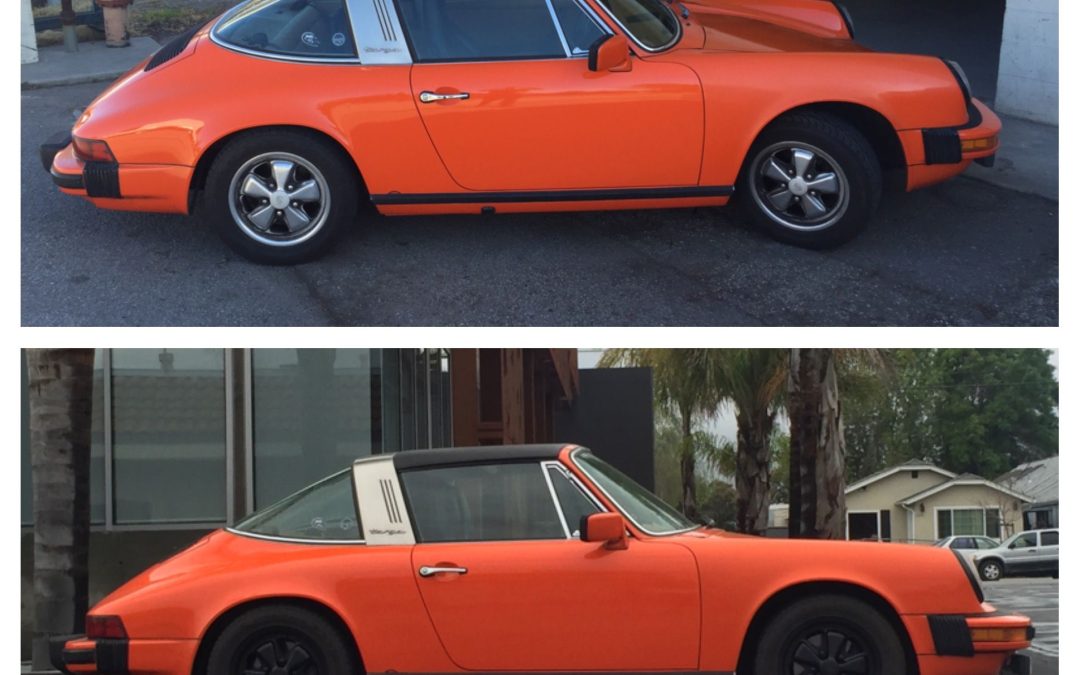
Powder coating can completely change the personality of a vehicle. Matte black wheels make a car look meaner. Bright calipers add a pop of color. A metallic finish can make a classic restoration feel brand new.
We do not coat an entire assembled vehicle like a paint shop would. Instead, we focus on removable metal parts that benefit from a durable, baked-on finish.
Wheels and Rims
Wheels face a rough life. Brake dust, gravel, curb bumps, road chemicals, moisture, and Santa Cruz coastal air all take their toll.
Powder coating creates a hard protective layer that helps defend against corrosion, chips, and everyday wear. It also gives your wheels a serious visual upgrade.
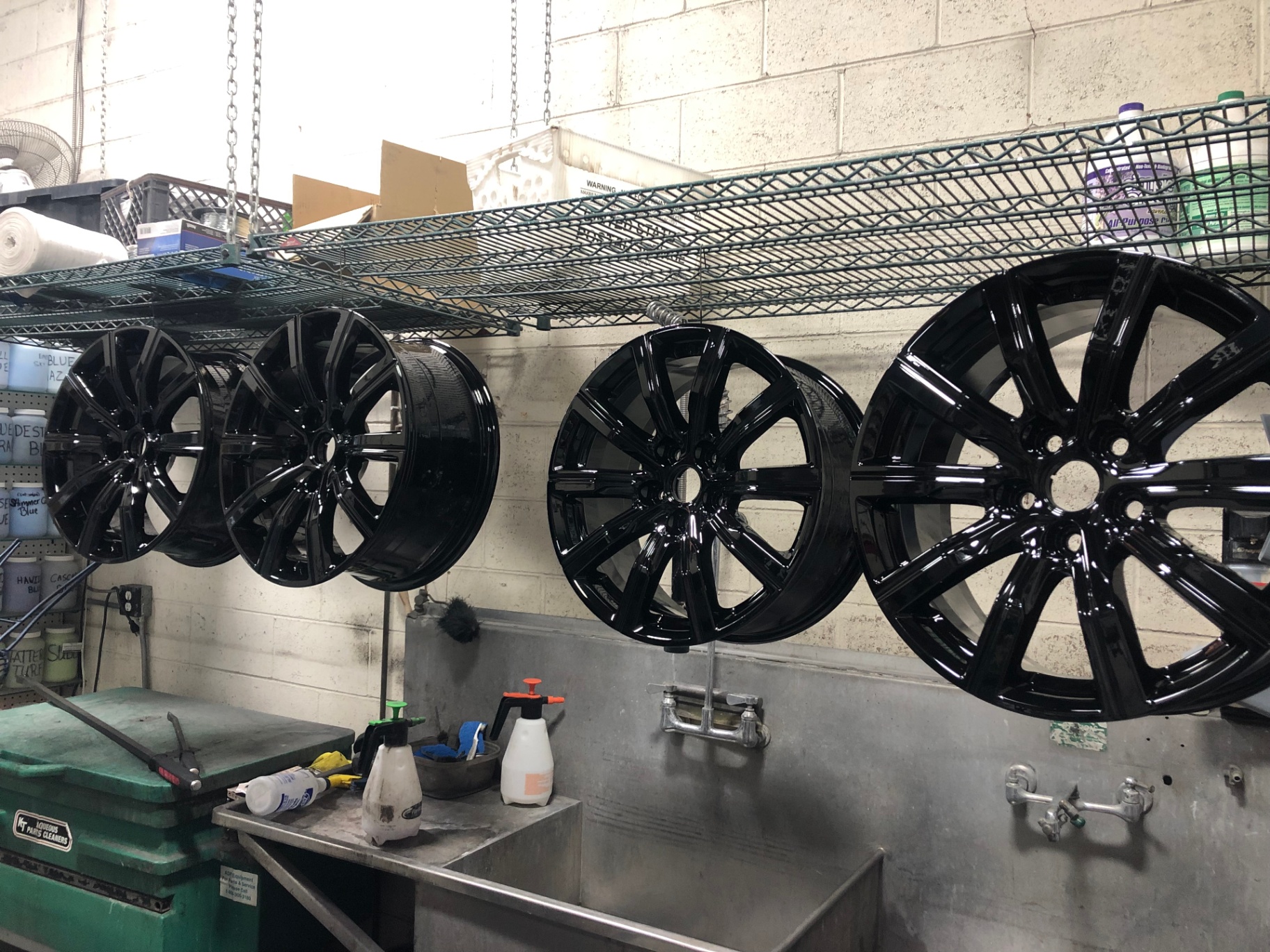
Before coating, we remove old finishes and contaminants, inspect the metal, and prepare the surface for proper adhesion. For wheels, tires and hardware need to be removed before coating. We also take care around valve stems, bearings, and other components that should not go into the oven.
Check out our photo gallery for examples of custom wheel finishes.
Motorcycles and Bicycles
Motorcycle frames, wheels, swingarms, brackets, and other metal components are excellent candidates for powder coating.
A fresh finish can make an older bike look completely different without changing its personality. Go subtle with satin black or graphite. Go bold with candy red, metallic blue, or something nobody else in the parking lot has.
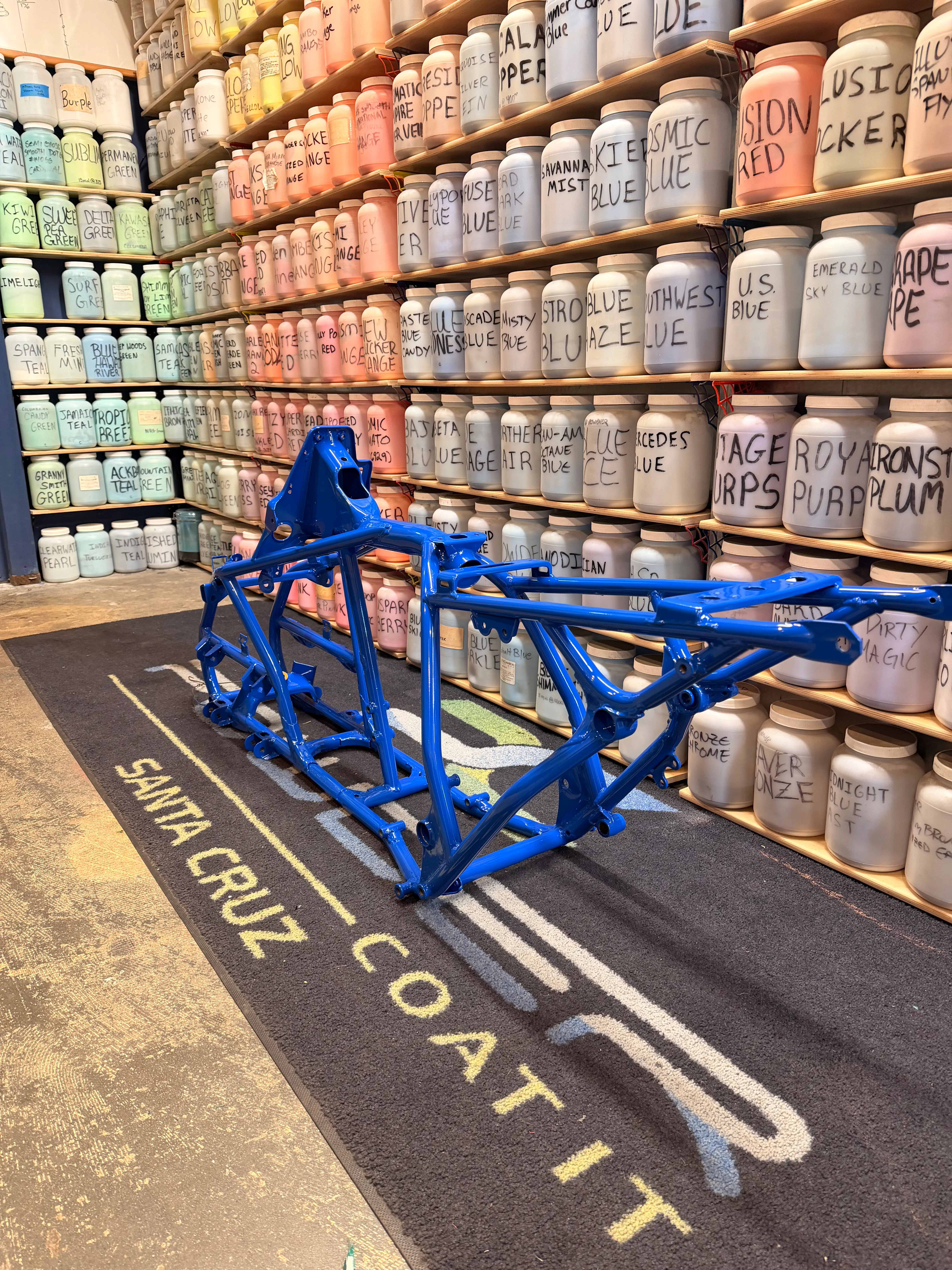
Bicycle frames and metal components can also get the custom treatment. It’s a great way to refresh a well-loved bike or finish a custom build.
Boats and Marine Parts
Santa Cruz marine air is beautiful. It is also hard on bare metal.
Moisture and salt can encourage corrosion on boat hardware and metal components. A properly prepared and coated part gets an added layer of protection against the coastal environment.
Powder coating can be used for suitable metal boat parts, brackets, hardware, and accessories. The exact process depends on the material, size, condition, and how the part is used.
Patio Furniture
Worn-out patio furniture does not always need to go to the dump.
Metal chairs, tables, frames, and decorative pieces can often be stripped, repaired, and powder coated with a fresh color. You get a cleaner look and a durable finish that is ready for outdoor living.
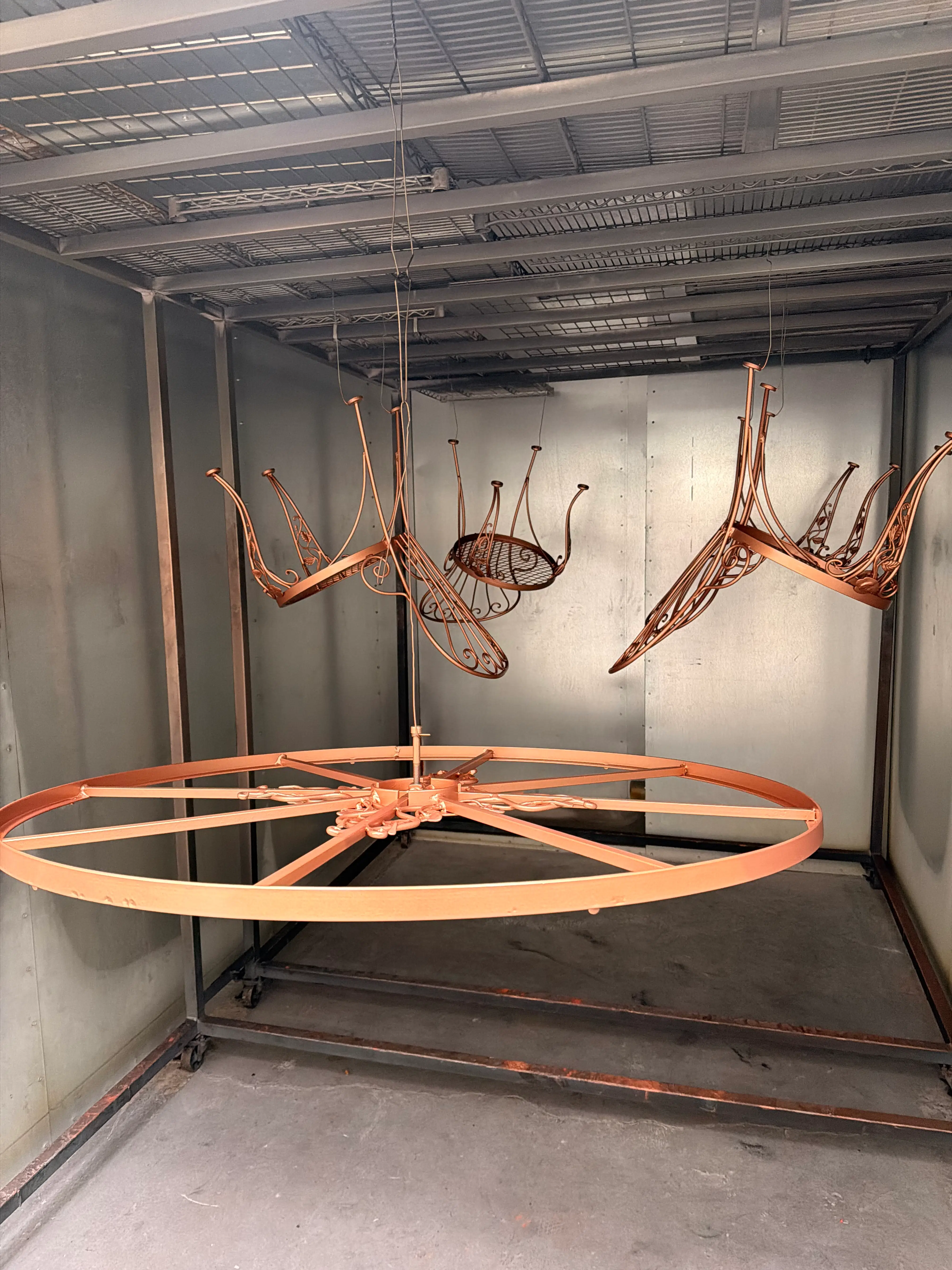
Black, white, bronze, copper, and textured finishes are popular choices. But if you want something more colorful, we have options.
Household Fixtures and Other Metal Parts
We also coat suitable household fixtures and custom metal parts, including:
- Light fixtures
- Shelving and brackets
- Railings
- Hardware
- Decorative metal pieces
- Garden components
- Small fabrication projects
- Restoration parts
Not sure whether your part is a good candidate? Send us the details. We can help you figure it out before you haul half your garage across town.
Our Powder Coating Process
A quality finish starts long before the color goes on.
1. We Inspect the Part
First, we look at the material, condition, size, and intended use. We check for rust, pitting, old coatings, grease, damage, and anything else that could affect the final result.
2. We Strip and Prepare the Surface
Old paint, powder, rust, and contaminants need to go. Depending on the part, we use blasting and other preparation methods to get down to a clean, coating-ready surface.
Preparation is not the glamorous part. It is also where a lot of the final quality comes from. A fancy color cannot hide poor prep. Trust us, we’ve tried staring at bad prep. It doesn’t help.
3. We Apply the Powder
We apply the powder electrostatically. The charged particles cling to the grounded metal part, helping create an even coat across the surface.
We offer a wide range of finishes, including gloss, satin, matte, metallic, textured, and custom colors. Visit our colors page to explore your options.
4. We Cure the Coating
The coated part goes into a curing oven. Heat melts and fuses the powder into a smooth, durable finish.
Once the part cools, we inspect it for coverage, consistency, and overall appearance. Then it is ready to get back to work, or look dramatically better sitting still.
Why Santa Cruz Customers Choose Powder Coat It
We are based right here at 7000 Soquel Avenue in Santa Cruz, making us convenient for customers in:
- Santa Cruz
- Watsonville
- Monterey
- San Jose
- The surrounding Central Coast
We also offer shipping options for customers in San Francisco and Los Angeles.
Our team has been coating parts for customers since 2010. Since then, we have helped customers add style and protection to vehicles, motorcycles, bicycles, boats, furniture, fixtures, and custom projects.
We focus on:
- Professional surface preparation
- Durable, protective finishes
- Custom colors and styles
- Practical advice for your project
- Friendly service without the factory attitude
Powder coating is not just about making a part look good. It helps protect valuable metal from moisture, corrosion, road debris, brake dust, and daily wear. That matters even more in a coastal place like Santa Cruz.
What About Exhaust Parts?
Parts exposed to extreme heat may need a different coating system.
For headers, exhaust pipes, and other high-temperature components, we offer ceramic exhaust coatings. Ceramic coating is designed for heat management and high-temperature durability where standard powder coating may not be the right fit.
The right finish depends on the part. We will help you choose the coating that matches the job.
Frequently Asked Questions
How long does powder coating last?
A properly prepared and coated part can last for many years. Actual service life depends on the material, environment, use, maintenance, and exposure to sunlight, moisture, chemicals, and impacts.
Is powder coating better than paint?
For many metal parts, yes. Powder coating typically provides better resistance to chips, scratches, moisture, and corrosion than traditional liquid paint. It also creates a consistent finish without brush marks or runs.
Can you powder coat wheels and rims?
Yes. Wheels and rims are some of our most popular projects. Tires, valve stems, weights, and other components must be removed before coating. We inspect and prepare the wheels before applying the finish.
Can powder coating help protect against Santa Cruz coastal air?
Yes. Powder coating creates a sealed protective layer over properly prepared metal. That helps reduce exposure to moisture and salty coastal air. Good preparation and regular cleaning still matter, especially for parts used near the ocean.
Can you powder coat over existing paint?
Usually, we remove the old finish first. Coating over damaged paint, rust, grease, or flaking material can lead to adhesion problems and an uneven result.
What colors are available?
We offer a wide selection of colors and finishes, including gloss, matte, satin, metallic, textured, and more. Browse our available colors, or contact us to discuss a custom look.
How do I know if my part can be powder coated?
Send us a description, photos, dimensions, and details about how the part will be used. We can help determine whether powder coating: or ceramic coating: makes sense for your project.
Ready to Upgrade Your Parts?
If your wheels are looking tired, your motorcycle frame needs a reset, or your patio furniture has seen better decades, let’s talk.
Call (831) 435-9558 to request a quote, or visit www.powdercoatitsc.com to learn more about powder coating in Santa Cruz.
Powder Coat It
7000 Soquel Avenue
Santa Cruz, CA 95062
Phone: (831) 435-9558
Website: www.powdercoatitsc.com
Recent Comments